Hello, and thanks for visiting! I am now writing more actively on my new site at www.kristinfriedersdorf.com. I will continue to monitor this site but will be updating frequently at my new internet headquarters. Please subscribe to updates on the new site if you're interested.
Best,
Kristin

Tuesday, May 16, 2017


Monday, February 08, 2016
A (not so) typical week at culinary school
It's difficult to detail a typical week of culinary school because every week is filled with new techniques, recipes, and challenges. When I finally made the leap to start my culinary program, I was ready to give it my all and get the most out it. Fast forward four semesters later and it has been a whirlwind of acquiring many new experiences and skills, with the bonus of gaining professional colleagues, inspiring instructors, a gang of new culinary friends, and more kitchen equipment than I ever thought possible. (Seriously, so much kitchen equipment.) Like any school experience, the sleep deprivation can get the best of us sometimes, and we do our best to keep a balance. After all, we're handling hot oil, knives, and fire every day, so it's best to be well-rested and alert.
My culinary program is accredited by the American Culinary Federation and combines practical cooking classes (starting with the classic French mother sauces) with academic content (industry-focused business math, management, sanitation and nutrition.) As you progress in your studies, the classes intensify, so at this point I'm in the thick of it. The pace of balancing work and school commitments can be exhausting, but it's a huge motivator to be surrounded by many hard working classmates juggling the same priorities and goals. No matter how hard you're working, there are countless other people next to you working just as hard. There is always someone working more hours, commuting further to class, and balancing more jobs-- I am in awe of many classmates and they definitely inspire me to be better every day. As one of my teachers says, working at that high level is what it takes to stand out among all the other white coats!
Each week, our email fills up with potential jobs, volunteer opportunities, and extra credit options. Plus, we are surrounded by a wealth of quality culinary content at this moment in history, and keeping up with it all feels essential. Do I listen to the newest episode of Radio Cherry Bombe first, or check out that interview from the Splendid Table? When am I going to get around to really reflecting on my thoughts from that recent Lucky Peach article on "happier kitchens"? Plus, find time to catch up on Mind of a Chef, finish reading Skirt Steak, follow the current commentary on no-tipping policies, check out some videos on ChefSteps, and study my new copy of Magnus Nilsson's Nordic Cookbook?! It's a bit overwhelming until you remind yourself you are lucky to be immersed in a subject you're so passionate about. So I proceed with this disclaimer: instead of describing a typical week, I'll describe one recent week of simultaneously wonderful and stimulating yet demanding culinary school madness from last semester.
Monday: Industry night out
It's the Monday before all the chaos of the week will begin. Since last spring, some classmates and I saved up for a meal at Shirley Chung's Twenty Eight restaurant in honor of a friend's birthday. Miraculously, four of us found a time to meet when we did not have work or school.
 As predicted, their front of house won our hearts and the back of house, our stomachs.
 For the occasion, I gifted my friend an ice cream cookbook since ice cream experiments are his passion project. The best kept secret of culinary school is that you will gain a network of people who will wholeheartedly encourage and inspire you to nerd out about cooking. When you have a habit of midnight cooking experiments like I do, it's nice to have friends who get it.
Tuesday: The school week begins
Tuesday mornings we have Menu Planning & Purchasing, where we learn about everything from purchasing ingredients and equipment for a restaurant to menu design. After class, we meet up with a chef instructor about our plan for Wednesday, when a group of us will volunteer our help at a sausage demo for some visiting local high school culinary students. I grab a quick lunch, change for work, then head to the restaurant (about 45 minutes away) for my Tuesday night shift. Tuesday nights are slower compared with weekends, so if I'm lucky I can get to bed by midnight and (through the power of coffee) be ready for our 7:30 am lecture. To help with the quick turnaround, I have applied the kitchen principle of mise en place to everything in my routine. Work clothes and school clothes are mised in advance, same with my work knife kit and school tool box. I quickly do some last minute brainstorming about my morning lab, make sure my recipes are ready to go, and fall asleep.
Wednesday: Garde Manger day
Wake up, drink coffee, repeat. I arrive at school at 6:30 am to start preparing for the afternoon sausage demo. Working the night shift followed by an early morning at school can be brutal, and in these times I reminisce about the rush of excitement I felt when I first put on my school chef whites. I know I will miss school when it's over, and that moment is fast approaching. For the sausage demo, I cut the pork into long strips to grind, put the sausage attachments in the freezer, and clean up just in time for our 7:30 Garde Manger lecture. After lecture, we jump straight into a cooking lab, and then straight from there into preparing for the sausage making demonstration!
 After our instructor leads the demo, my classmates and I poach and grill the results so they can taste it after their tour.
 Despite the busy nature of this week, these volunteer opportunities at school are really rewarding and some of my favorite memories. We clean up by the early evening, and then I re-focus on my cake project. Throughout the semester, our Pastry Arts class has explored the intricacies of cake design and construction, lessons which will culminate in the production of a wedding cake on Friday. While I have put a lot of time into my cake, I still feel like I am running out of time finalizing some last details. I head to an industry supply store to get a few tools I need for Cake Day, then type up a production list so I can stay organized heading into the morning. I also scour the internet for research on royal icing, a last minute addition to my cake design. I review some baking textbooks, watch some YouTube icing videos, and make some icing batches. At some point, I reason with myself to stop the royal icing madness and go to bed.
Thursday: Don't Mess with Texas Day
Each Thursday, our Culinary 3 class works together to produce a 3-course themed lunch menu that is then served banquet style to the public. Before service, two student sous chefs must complete a culinary demo based on the week's theme.
 To prepare for each lunch, we rotate through various stations during the semester: from the pantry to the bakery to the hot line. We all have our comfort zones, whether savory or pastry, but this gives us the chance to become more versatile cooks. Today the menu is Texas-themed, and my lab partner and I are assigned to help at the vegetable station, where we produce mashed potatoes, cowboy beans, creamed corn, and roasted baby pumpkin wedges for service. After service, we take a moment to celebrate our teamwork and exchange high fives-- but just a moment, because now it's time to prepare for Cake Day. We'll present our cakes to a group of judges, so I pick up a tablecloth and a mini easel for my display table setup, plus some extra ribbon for my cake base and a styrofoam cake dummy for last minute practicing. In a true case of over thinking things, I head to a restaurant supply where I get some gum arabic to experiment with, because I read that it can help stabilize royal icing. Later, I practice buttercream piping and make one more final batch of icing. Finally, I pack up my presentation supplies, extra towels and aprons, and anything else I might possibly need for production day.
Friday: Cake Day
Cake Day is finally here. This is my first attempt at a professional wedding cake. Learning the elements of cake construction and design is a bit like learning a foreign language.
 To make it more challenging, we were assigned a specific color palate to work with based on imaginary clients. We arrived to the classroom around 7 am and had to present our cakes for judging at 1 pm.

Over the course of three labs, we baked, froze, and filled our cakes, then the final Cake Day was reserved for all decoration elements including icing, fondant, adornments, toppers, and any other details that went into our final designs. Most of us worked straight from 7 am to 1 pm with an intense focus on our cakes. At the end of the day, I was proud of what I produced, especially considering my complete lack of professional cake experience. However, the perfectionist in me longed to have just one more hour to make my cake more polished instead of rushing through the final stages of the design.

While I didn't make a perfect cake on the first try, I learned an incredible amount about the fundamentals of cake design. Beyond pastry arts, the exercise was a great lesson in time management, production, and execution. I knew our class would run late that day, so thankfully I had requested the night off from work and took the evening to recover from the perils of cake production. Since the finished product was for a fake wedding, my various extended family members were the recipients of several cake wedges!
Saturday/Sunday: Time to completely switch gears and get ready for my night shifts at the restaurant. Cake day might as well be a distant memory at this point-- it's time to feed the masses!
And there you have it-- the not so typical, very amazing, somewhat exhausting, and extremely rewarding week in the life of a culinary arts and baking student.
My culinary program is accredited by the American Culinary Federation and combines practical cooking classes (starting with the classic French mother sauces) with academic content (industry-focused business math, management, sanitation and nutrition.) As you progress in your studies, the classes intensify, so at this point I'm in the thick of it. The pace of balancing work and school commitments can be exhausting, but it's a huge motivator to be surrounded by many hard working classmates juggling the same priorities and goals. No matter how hard you're working, there are countless other people next to you working just as hard. There is always someone working more hours, commuting further to class, and balancing more jobs-- I am in awe of many classmates and they definitely inspire me to be better every day. As one of my teachers says, working at that high level is what it takes to stand out among all the other white coats!
Each week, our email fills up with potential jobs, volunteer opportunities, and extra credit options. Plus, we are surrounded by a wealth of quality culinary content at this moment in history, and keeping up with it all feels essential. Do I listen to the newest episode of Radio Cherry Bombe first, or check out that interview from the Splendid Table? When am I going to get around to really reflecting on my thoughts from that recent Lucky Peach article on "happier kitchens"? Plus, find time to catch up on Mind of a Chef, finish reading Skirt Steak, follow the current commentary on no-tipping policies, check out some videos on ChefSteps, and study my new copy of Magnus Nilsson's Nordic Cookbook?! It's a bit overwhelming until you remind yourself you are lucky to be immersed in a subject you're so passionate about. So I proceed with this disclaimer: instead of describing a typical week, I'll describe one recent week of simultaneously wonderful and stimulating yet demanding culinary school madness from last semester.
Monday: Industry night out
It's the Monday before all the chaos of the week will begin. Since last spring, some classmates and I saved up for a meal at Shirley Chung's Twenty Eight restaurant in honor of a friend's birthday. Miraculously, four of us found a time to meet when we did not have work or school.


Tuesday mornings we have Menu Planning & Purchasing, where we learn about everything from purchasing ingredients and equipment for a restaurant to menu design. After class, we meet up with a chef instructor about our plan for Wednesday, when a group of us will volunteer our help at a sausage demo for some visiting local high school culinary students. I grab a quick lunch, change for work, then head to the restaurant (about 45 minutes away) for my Tuesday night shift. Tuesday nights are slower compared with weekends, so if I'm lucky I can get to bed by midnight and (through the power of coffee) be ready for our 7:30 am lecture. To help with the quick turnaround, I have applied the kitchen principle of mise en place to everything in my routine. Work clothes and school clothes are mised in advance, same with my work knife kit and school tool box. I quickly do some last minute brainstorming about my morning lab, make sure my recipes are ready to go, and fall asleep.
Wednesday: Garde Manger day
Wake up, drink coffee, repeat. I arrive at school at 6:30 am to start preparing for the afternoon sausage demo. Working the night shift followed by an early morning at school can be brutal, and in these times I reminisce about the rush of excitement I felt when I first put on my school chef whites. I know I will miss school when it's over, and that moment is fast approaching. For the sausage demo, I cut the pork into long strips to grind, put the sausage attachments in the freezer, and clean up just in time for our 7:30 Garde Manger lecture. After lecture, we jump straight into a cooking lab, and then straight from there into preparing for the sausage making demonstration!


Thursday: Don't Mess with Texas Day
Each Thursday, our Culinary 3 class works together to produce a 3-course themed lunch menu that is then served banquet style to the public. Before service, two student sous chefs must complete a culinary demo based on the week's theme.

Friday: Cake Day
Cake Day is finally here. This is my first attempt at a professional wedding cake. Learning the elements of cake construction and design is a bit like learning a foreign language.


Over the course of three labs, we baked, froze, and filled our cakes, then the final Cake Day was reserved for all decoration elements including icing, fondant, adornments, toppers, and any other details that went into our final designs. Most of us worked straight from 7 am to 1 pm with an intense focus on our cakes. At the end of the day, I was proud of what I produced, especially considering my complete lack of professional cake experience. However, the perfectionist in me longed to have just one more hour to make my cake more polished instead of rushing through the final stages of the design.

While I didn't make a perfect cake on the first try, I learned an incredible amount about the fundamentals of cake design. Beyond pastry arts, the exercise was a great lesson in time management, production, and execution. I knew our class would run late that day, so thankfully I had requested the night off from work and took the evening to recover from the perils of cake production. Since the finished product was for a fake wedding, my various extended family members were the recipients of several cake wedges!
Saturday/Sunday: Time to completely switch gears and get ready for my night shifts at the restaurant. Cake day might as well be a distant memory at this point-- it's time to feed the masses!
And there you have it-- the not so typical, very amazing, somewhat exhausting, and extremely rewarding week in the life of a culinary arts and baking student.
Sunday, August 23, 2015
kitchen commandments
When I worked overseas, I had dreams of moonlighting at a restaurant in the great European tradition of culinary apprenticeships. During my travels, I crossed paths with many cooks, bakers, brewers, and passionate food industry professionals. I did plenty of cooking with locals, had some epic international potlucks and picnics, and tasted every foreign ingredient I could.
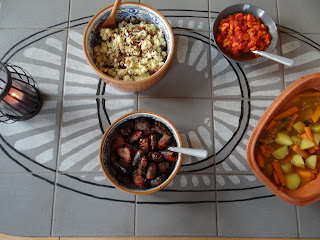


I attended food festivals and conferences, took cooking classes, and immersed myself in culinary experiences. But I never found that ideal professional apprenticeship opportunity. I realize now that this is a classic "if I knew then what I know now" scenario. Since enrolling in culinary school and gaining industry experience, I can now knock on the door of any kitchen armed with a stronger knowledge base and higher confidence level.

Thanks to school instructors and industry mentors, I discovered there are certain universal rules you can apply to all professional kitchens. Here is a short (although not exhaustive) list of kitchen commandments. While these tips are mostly common sense with a dash of industry insight, I hope this content is helpful to those just starting out.


an international potluck in Copenhagen's Nørrebro neighborhood

a bakery's organic bread offerings in the city center

a traditional Danish Christmas lunch in the Copenhagen suburbs

a sampling of herring at a Slow Food event

Thanks to school instructors and industry mentors, I discovered there are certain universal rules you can apply to all professional kitchens. Here is a short (although not exhaustive) list of kitchen commandments. While these tips are mostly common sense with a dash of industry insight, I hope this content is helpful to those just starting out.
1. Always leave a kitchen cleaner than you found it. Work as clean as you can, establish good habits, and treat your cutting board like a pristine surface. And beware when picking up large stock pots: if they are scorched underneath, they will put a big black stain on your white chef jacket when you pick them up. Classic rookie move (and I have the bleached chef's coats to prove it.)
2. Use every drop of product possible. If you ever have your own business, you'll think about every cent that goes towards your food cost, and the most thoughtful employees do this too. So scrape each and every last drop of nutella from that nutella jar before you throw it away.
3. Be willing to embarrass yourself. No one is born knowing how to filet a fish. Be willing to ask questions, admit what you don't know, learn from your mistakes, and embrace these humbling experiences with open arms. A kind restaurant colleague recently told me, "All chefs have screwed up way more than they've gotten it right." It takes a lot of practice to get to where you need to be, so find beauty in the frustrating but ultimately rewarding process.
4. Invest in high quality slip-resistant shoes. You're going to be on your feet a lot. A 50-year industry veteran once told me, "you can be cheap with other things, but not with your shoes." As much as you can afford to, spring for the good ones with lots of support.
5. Mise en place. It's a way of life. Prepare your ingredients in advance and stay organized. And remember that recipes can only take you so far-- you must also evaluate what you produce and know how to fix it if it's not right.
6. Take notes. Whenever possible, ask your chef how to do something only once. Always defer to how the chef you are working for wants the task done, even if a previous boss or teacher taught you a different method. Keep a little notebook in your back pocket and make it your kitchen bible. (For the record, my favorite kitchen notebooks are Moleskin's hard cover pocket size and I stock up on them when they go on sale.)


7. Learn from everyone. Respect each job in the kitchen. Especially if you want to be running the show someday, know how to work the dish machine, how to clean the fryer, and observe the way everything works in the operation. Be a sponge, absorb everything, and show appreciation for your kitchen teammates.
8. Respect your knives. Never try to catch a falling knife, it's a losing game. Keep them sharp. And be careful not to leave blades hanging out in a sink where they can injure someone. The most common knife you'll use is an 8 inch or 10 inch chef's knife, so it's practical to invest in one of those. And don't break the bank with your first purchase: you can get a decent starter knife for under $40.
9. Be vocal. Make yourself seen and heard in the kitchen, or else you're going to get cut, burned, or otherwise injured. Say "behind" when you're walking behind someone, "hot" when you're carrying hot pots and pans through the kitchen, or "sharp knife!" if you're walking through the kitchen with sharp objects.
10. Walk faster! Make your trips within the kitchen as efficient as possible and have a sense of urgency.
Finally, be bold and use common sense. Julia Child offered the best advice when she said: "The main thing is to have a gutsy approach and to use your head."
Finally, be bold and use common sense. Julia Child offered the best advice when she said: "The main thing is to have a gutsy approach and to use your head."
Saturday, June 27, 2015
midnight mise
Before starting culinary school, it was typical for me to spend sleepless nights dabbling in new recipes. After a day at the office, I would decide it was urgent that I learn choux pastry, attempt the perfect lattice pie design, find a recipe utilizing beet tops so the greens wouldn't go to waste, or figure out what made the filling in Indian samosas taste so good. I produced all of these curiosities in a tiny but well equipped studio apartment kitchen in Santa Monica, California.

My galley-style kitchen, roughly 57 inches by 17 feet, sat separate from the bedroom but close enough for the smell of freshly baked cookies (or whatever was in the oven) to permeate every square inch of space whether you wanted it to or not. Vertical storage solutions were key, and strategic hooks and shelves lined the walls. Meanwhile, the bar sink made washing dishes and equipment a struggle, and the oven and refrigerator were smaller than typical American household appliances. While the average apartment dweller might decide this was too small a space to ambitiously cook in, I was an avid cook with serious determination. Plus, I decided that there was a certain romance to it. During my studio apartment residency, the New York Times posted an article about Mark Bittman's famously bad New York kitchen. Bittman's visibility as a food writer certainly fueled my motivation and my midnight mise en place habits: if he could produce so much content and develop so much knowledge in a less than perfect kitchen, why should I hold back? Like Bittman's well known book, I wanted to know how to cook everything and often used his recipes as a reference. Through these apartment cooking adventures, I was joining the ranks of food writers in overcrowded yet desirable culinary cities, which felt like good company to be in.

So it was in this kitchen that I started experimenting with bread doughs and spices and many weekly impulse produce purchases from the Santa Monica Farmers Market. Looking back, I think it was fate that one of the best farmers markets in the country was just a stone's throw from my office door. It is still one of my favorite produce destinations, with artichokes the size of your head, colorful squash blossoms, juicy blood oranges, and culinary inspiration wherever you turn.


No wonder I could get lost for hours exploring new dishes and cooking methods. I learned a lot about different ingredients during this time of experimentation. I also learned the valuable lesson that you will never have the perfect kitchen or all of the right equipment that a recipe demands. What's important is to spend time practicing in the kitchen regardless of perceived obstacles.
Now that the culinary world is my main professional focus, my late night experiments are more rare. I spend more time wearing aprons than regular clothes, and I'm a different cook now than I was in the days of that studio apartment. I still have a lot to learn, but now I am lucky to have so many more tools at my fingertips. And while I may never have an ideal dream kitchen, the stuff of cookbook spreads and architectural magazines, I'll always have my determination.

My galley-style kitchen, roughly 57 inches by 17 feet, sat separate from the bedroom but close enough for the smell of freshly baked cookies (or whatever was in the oven) to permeate every square inch of space whether you wanted it to or not. Vertical storage solutions were key, and strategic hooks and shelves lined the walls. Meanwhile, the bar sink made washing dishes and equipment a struggle, and the oven and refrigerator were smaller than typical American household appliances. While the average apartment dweller might decide this was too small a space to ambitiously cook in, I was an avid cook with serious determination. Plus, I decided that there was a certain romance to it. During my studio apartment residency, the New York Times posted an article about Mark Bittman's famously bad New York kitchen. Bittman's visibility as a food writer certainly fueled my motivation and my midnight mise en place habits: if he could produce so much content and develop so much knowledge in a less than perfect kitchen, why should I hold back? Like Bittman's well known book, I wanted to know how to cook everything and often used his recipes as a reference. Through these apartment cooking adventures, I was joining the ranks of food writers in overcrowded yet desirable culinary cities, which felt like good company to be in.

A little snapshot of my old bookshelf and the beginnings of my cookbook collection, a collection which has rapidly expanded each year


No wonder I could get lost for hours exploring new dishes and cooking methods. I learned a lot about different ingredients during this time of experimentation. I also learned the valuable lesson that you will never have the perfect kitchen or all of the right equipment that a recipe demands. What's important is to spend time practicing in the kitchen regardless of perceived obstacles.
Now that the culinary world is my main professional focus, my late night experiments are more rare. I spend more time wearing aprons than regular clothes, and I'm a different cook now than I was in the days of that studio apartment. I still have a lot to learn, but now I am lucky to have so many more tools at my fingertips. And while I may never have an ideal dream kitchen, the stuff of cookbook spreads and architectural magazines, I'll always have my determination.
Tuesday, May 26, 2015
A quiet moment
Somehow it's finals week of my third semester of culinary school. At the same time, it seems like it was just yesterday when I returned to school to embark on this exciting, humbling, and rewarding culinary adventure.


I haven't written a lot about my time at school yet. In truth, I've been holding on for dear life as I race from one commitment to the next and navigate the journey of a big career switch. Blogging may have taken a backseat to these endeavors for now, as I search for quiet moments in between six classes, restaurant work, volunteer opportunities, and general to-dos. But I'd like to think that late night hours practicing the perfect buttercream for a test or executing plated dessert components for a project are ultimately in service of the blog.

While I wish I had more time for blogging, I've calmed the antsy writer in me by reflecting each day in the form of many scribbled notes in various Moleskin notebooks. To me, having a Moleskin in my pocket in the kitchen is as essential as having a sharp chef's knife. I've amassed quite a collection of them during my studies, full of recipes, methods, and advice from my chef instructors: ("Hollandaise is tricky. You can be comfortable with it for years. Then one day, when you need it the most, it breaks on you.") It's true that I may have a bit of a writer's Moleskin addiction, but I'm also making it a priority to look up, put the pen down, and enjoy the ride. I spent my fair share of time daydreaming about attending culinary school, and now that I'm finally here I feel very lucky.
Learning this trade is a lifelong process, but school is providing me with an excellent foundation. I've learned a lot of "secrets" of the industry that will be of practical use, the behind the scenes nuts and bolts that will help me go into any kitchen with confidence. And luckily for the blog, since chefs are not like magicians, we're actually allowed to reveal at least some of our secrets.

The pictures above are from a la carte dessert day in our Baking 2 class: devil's food cake with balsamic soaked strawberries, chocolate sauce, vanilla ice cream, and a tuile garnish. The secret trick is to scoop the ice cream in the freezer and leave it there on a parchment lined sheet pan until it's ready to plate so it doesn't start melting on your dinner guests.
Thursday, January 22, 2015
Danish pastries and palm trees
Working abroad was on my life bucket list ever since studying abroad in college, an experience that gave me just a little taste of everyday life in another country. It was a first course that left me hungry for more. When I had the opportunity to return to Northern Europe to work for a Danish company on an almost year and a half contract, I had to seize it.


Expat life is full of rewards as well as peppered with hurdles, from small to big, and from humorous to frustrating. There were days I felt enormous pride when I could get through an entire grocery store transaction in Danish without someone realizing I was a big American impostor.
I practiced this nearly every day, and was usually found out on the rare occasion that a Danish store clerk broke the typical pattern of the exchange and started making random small talk. Cue my very confused expression and a moment of "what did they say?" terror and it was all over, after which they would always graciously and seamlessly switch to perfect english. True, there is little risk of real disaster in this situation, as so many Danes speak such impressive english, and are so forgiving with those of us who speak bad Danish. But living out of a suitcase for over a year and adjusting to a new set of cultural norms can be alienating at times, a feeling perhaps heightened by the very dark and cold Danish winter. Silly as it may seem, even small successes in your grocery store interactions (or getting through an entire yoga class in Danish) can feel like victories that offer you a sense of belonging.


Beyond my own efforts to live life among the Danes, I was particularly lucky that my employer made a very intentional effort to foster a strong workplace community: there were bike to work contests, wine tastings, beer socials featuring an aggressive amount of potato chips and Carlsberg, and even a few bonding trips to Sweden.
Despite our access to flashy travel excursions, one of my favorite workplace initiatives was the weekly Wednesday morning breakfast. Each week, the entire company would gather together to break bread, specifically bread and buttery Danish pastries from Sankt Peders Bageri (one of the oldest bakeries in Denmark.)
The bread selection was an assortment that always featured rugbrød (dark Danish rye bread), french-style bread with seeds, and various rolls. Liberal amounts of butter, jam, and cheese were available to top off bread slices and rolls, and coffee and tea flowed as the perfect pastry accompaniments. For me, these moments are at the heart of the experience of living abroad-- the everyday interactions that define living in a community, and the new routines you learn to love. Wednesday breakfast was a chance to learn which pastries your bosses favor, which of your coworkers like rejeost (spreadable "shrimp cheese"!) on their morning bun, a chance to share bike commuting in the rain woes or flat tire disaster stories. Plus, what is more charming than waking up for work and knowing that a feast of pastries and freshly baked bread awaits you upon your arrival? Since I no longer have Wednesday morning breakfasts to look forward to, I can take solace in Culver City's Copenhagen Pastry, a shop in west Los Angeles operated by actual Danes that uses the fitting motto "pastries bring people together."
Here, you can have your Danish treats, and your palm trees and sunny weather too, without any fears of your pastry orders getting lost in translation.
Friday, January 09, 2015
true tales of a cooking hotline crisis manager
I once worked at a specialty cooking store, where they sold things like truffle salts, caviars, fine cooking oils, artisan cheeses, kitchen equipment, and more.

One of my favorite parts about working there was meeting fellow food lovers, and friendly folks from all walks of the food industry-- everyone from local chefs to food entrepreneurs who told me tales of inventing hot sauce concoctions, building barbecue empires, and launching cottage food operations. As Julia Child said, "people who love to eat are always the best people."
I tried my best to gain a foundation of knowledge about all the products in the store, because we often received random cooking and baking questions in the rapid fire style of a cooking hotline. It was at times terrifying, as I hated the feeling that I might disappoint a customer who needed my help. However, fully mastering the nuances of each ingredient's savory and pastry applications could take three lifetimes (and then there was the cooking equipment to consider.) To try to conquer the learning curve, I spent a lot of time on food company websites, trying to absorb the back story of what made each product special. For the record (and just to nerd out about food branding for a moment), the Maldon salt company website is one of the most informative and engaging ones I have ever seen. (Did you know they are a 4th generation family business in Essex, England, a region which has been hand harvesting salt for over 2,000 years?) I love food products that have a great story to tell. But for every website like that one, I struggled with the companies that had a minimalist web presence, or those selling obscure imported ingredients that had no English translation (I know a freelance writer that can help you with that.)
I will not lie: not all of this was a selfless pursuit. I was a glutton for the kind of instant hero status you would get when you helped someone find the missing ingredient they needed for their tasting menu event that night, their culinary school final the next morning, or their restaurant opening. I loved the rush of tracking down those elusive ingredients. If we didn't have the item, I would call up the Japanese market, send them to the Persian grocer, or suggest the Mexican meat counter nearby. I once had a woman request to purchase exactly $48 in dark chocolate for a friend who had received a parking ticket in that amount, for which she wanted to pay her back in sweets instead of cash. All of the store's chocolate was pre-portioned in random weighed amounts, much like the containers you find at supermarket delis. So I scanned and scanned until I found the exact right pieces to represent the value of her friend's parking citation woes, and this nice woman even wrote me a thank you note for doing so. If you were ever wondering, these are the glory moments of a culinary retail worker.
Then there are the moments that leave you at a loss: a panicked customer calling in from home to explain, live as it is happening, a candy-making crisis where the sugar isn't doing what it's supposed to be doing and the chocolate step has gone seriously awry. Or, the woman and her sister making an old 1970's family dinner recipe in honor of their mom, an annual tradition involving aspic and Easter ham. With Easter fast approaching, they discovered that every single local store did not have the apricot jello they needed, and sadly I had to tell her we had none on our shelves either. In these moments, often the only thing I could offer were words of encouragement. If only I had known to refer them to this apricot aspic recipe using a base of orange jello and canned apricots, I could have saved Easter. Maybe one day, I will channel beloved radio host and cooking expert Lynne Rossetto Kasper and instinctively provide a graceful answer to each and every cooking crisis I encounter. (If you have not yet listened to her excellent podcast, you should start now.) Until then, I'll just ask myself: what would L.R.K. do?
One of my favorite parts about working there was meeting fellow food lovers, and friendly folks from all walks of the food industry-- everyone from local chefs to food entrepreneurs who told me tales of inventing hot sauce concoctions, building barbecue empires, and launching cottage food operations. As Julia Child said, "people who love to eat are always the best people."
I tried my best to gain a foundation of knowledge about all the products in the store, because we often received random cooking and baking questions in the rapid fire style of a cooking hotline. It was at times terrifying, as I hated the feeling that I might disappoint a customer who needed my help. However, fully mastering the nuances of each ingredient's savory and pastry applications could take three lifetimes (and then there was the cooking equipment to consider.) To try to conquer the learning curve, I spent a lot of time on food company websites, trying to absorb the back story of what made each product special. For the record (and just to nerd out about food branding for a moment), the Maldon salt company website is one of the most informative and engaging ones I have ever seen. (Did you know they are a 4th generation family business in Essex, England, a region which has been hand harvesting salt for over 2,000 years?) I love food products that have a great story to tell. But for every website like that one, I struggled with the companies that had a minimalist web presence, or those selling obscure imported ingredients that had no English translation (I know a freelance writer that can help you with that.)
I will not lie: not all of this was a selfless pursuit. I was a glutton for the kind of instant hero status you would get when you helped someone find the missing ingredient they needed for their tasting menu event that night, their culinary school final the next morning, or their restaurant opening. I loved the rush of tracking down those elusive ingredients. If we didn't have the item, I would call up the Japanese market, send them to the Persian grocer, or suggest the Mexican meat counter nearby. I once had a woman request to purchase exactly $48 in dark chocolate for a friend who had received a parking ticket in that amount, for which she wanted to pay her back in sweets instead of cash. All of the store's chocolate was pre-portioned in random weighed amounts, much like the containers you find at supermarket delis. So I scanned and scanned until I found the exact right pieces to represent the value of her friend's parking citation woes, and this nice woman even wrote me a thank you note for doing so. If you were ever wondering, these are the glory moments of a culinary retail worker.
Then there are the moments that leave you at a loss: a panicked customer calling in from home to explain, live as it is happening, a candy-making crisis where the sugar isn't doing what it's supposed to be doing and the chocolate step has gone seriously awry. Or, the woman and her sister making an old 1970's family dinner recipe in honor of their mom, an annual tradition involving aspic and Easter ham. With Easter fast approaching, they discovered that every single local store did not have the apricot jello they needed, and sadly I had to tell her we had none on our shelves either. In these moments, often the only thing I could offer were words of encouragement. If only I had known to refer them to this apricot aspic recipe using a base of orange jello and canned apricots, I could have saved Easter. Maybe one day, I will channel beloved radio host and cooking expert Lynne Rossetto Kasper and instinctively provide a graceful answer to each and every cooking crisis I encounter. (If you have not yet listened to her excellent podcast, you should start now.) Until then, I'll just ask myself: what would L.R.K. do?
free your dough
I discovered this salted-butter apple galette recipe around Thanksgiving, after seeing Bon Appetit post a link to the dessert. While they surely posted it with the holiday in mind, I loved the recipe so much that I'm reserving it a spot on my year-round baking roster. Galette is a much prettier (and more French) way to describe a freeform tart or pie. With a galette, instead of manipulating your dough to fit the confines of a pie pan, you can let it be free.

No fussing with the crust, fancy crimping, or fork marks necessary-- just fold over the dough to make a delicious, buttery perimeter that will hold your filling in place. It is beautiful simplicity that tastes just as wonderful as any pie you'll ever make. Another thing I love about this recipe is that it democratizes pastry. You do not need to own a pie pan, nor do you need any previous pie experience. You need little more equipment than a knife, a vegetable peeler, a sheet pan, and a sauce pan for melting the butter. (A rolling pin is handy, but you can also use a wine bottle to roll out your dough.) While I adore kitchen equipment, I firmly believe that you should not let a lack of equipment stand between you and a recipe. In fact, my favorite cookbooks are the ones where authors suggest a thoughtful workaround if you don't have the right gadget for the job.

The times I attempted a recipe without all the proper equipment or ingredients are the experiences I learned the most from. I seem to recall staying up late to attempt my first batch of yeast-risen cinnamon rolls during my senior year of college. This was long before I owned multiple rolling pins in various models, or had even a basic knowledge of yeast, and I rolled out the dough on a dormitory desk I transformed into a baker's bench. After college, there were many days of impulse buys at the Santa Monica Farmers' Market, which I was lucky enough to work adjacent to for almost five years.

On Wednesdays, I would walk down from my office building, buy an ingredient I'd never heard of, ask a few questions at the farm stand, and figure out the rest as I went (i.e. lots of googling topics like "how to cook sunchokes", "how to cook rainbow chard", and "what to do with your beet leaves?") Then there were the many months spent out of town for work, in a remote area outside of Los Angeles where the nearest grocery store was a good thirty minute drive away. During this time, I lived in a work provided apartment with a stove but no oven. I quickly learned the art of toaster oven cookery and on my days off, sometimes created "gourmet" meals made only from the ingredients I could find at the local general store/ gas station. The urge to cook was too strong to let circumstance dictate my meal options! Then, when I lived temporarily in Denmark, I shared a basic apartment kitchen with a local and learned to make hummus in her quirky old blender instead of a food processor.

I used google translate to decipher, letter by letter, the ingredients and cooking directions on Danish food packages (leading me to wonder, what did expats do before google translate?) My twenties were a time of recipe hacking, ingredient impulse buying, foreign language cooking, and technique googling, and I would like to think I'm a better cook because of it. If you're ever feeling like your equipment list or pantry is lacking, figure out a workaround and carry on-- the adventure will surely be worth it. Or find an alternative recipe: after all, a galette is every bit as tasty as a pie.
The times I attempted a recipe without all the proper equipment or ingredients are the experiences I learned the most from. I seem to recall staying up late to attempt my first batch of yeast-risen cinnamon rolls during my senior year of college. This was long before I owned multiple rolling pins in various models, or had even a basic knowledge of yeast, and I rolled out the dough on a dormitory desk I transformed into a baker's bench. After college, there were many days of impulse buys at the Santa Monica Farmers' Market, which I was lucky enough to work adjacent to for almost five years.
On Wednesdays, I would walk down from my office building, buy an ingredient I'd never heard of, ask a few questions at the farm stand, and figure out the rest as I went (i.e. lots of googling topics like "how to cook sunchokes", "how to cook rainbow chard", and "what to do with your beet leaves?") Then there were the many months spent out of town for work, in a remote area outside of Los Angeles where the nearest grocery store was a good thirty minute drive away. During this time, I lived in a work provided apartment with a stove but no oven. I quickly learned the art of toaster oven cookery and on my days off, sometimes created "gourmet" meals made only from the ingredients I could find at the local general store/ gas station. The urge to cook was too strong to let circumstance dictate my meal options! Then, when I lived temporarily in Denmark, I shared a basic apartment kitchen with a local and learned to make hummus in her quirky old blender instead of a food processor.
I used google translate to decipher, letter by letter, the ingredients and cooking directions on Danish food packages (leading me to wonder, what did expats do before google translate?) My twenties were a time of recipe hacking, ingredient impulse buying, foreign language cooking, and technique googling, and I would like to think I'm a better cook because of it. If you're ever feeling like your equipment list or pantry is lacking, figure out a workaround and carry on-- the adventure will surely be worth it. Or find an alternative recipe: after all, a galette is every bit as tasty as a pie.
Thursday, January 08, 2015
practice makes perfect
Around midnight, I parked my car in the driveway on my quiet street, with only the noise of the neighbor's sprinklers to keep me company. I trudged towards the door with my flour-dusted work shoes, hoping that the charged adrenaline of restaurant work would fade and that my brain would quiet down. But these days, I'm always reflecting on the huge volume of culinary skills I have been learning (and trying to perfect) within a relatively short amount of time. And that leaves me thinking about what I can do better. And when I think about this, I often have flashbacks of the movie Jiro Dreams of Sushi, a documentary about a famed sushi master and his restaurant in Tokyo. There is one part of the film that features a sushi chef who tells the story of how he made an egg sushi recipe 200 times in 4 months, presenting it to the head sushi chef. Each and every one was rejected, until he finally built up the skill to create the egg sushi to the chef's standards.
For anyone learning the culinary trade, you're lucky if you only have as few as 200 humbling failed egg sushi moments, and you're in debt to the people who are patient enough to teach you how not to repeat them. Tomorrow: wake up, drink coffee, repeat. Practice makes perfect.
Reader's note: Jiro Dreams of Sushi is currently available to watch on Netflix, as of January 2015.
For anyone learning the culinary trade, you're lucky if you only have as few as 200 humbling failed egg sushi moments, and you're in debt to the people who are patient enough to teach you how not to repeat them. Tomorrow: wake up, drink coffee, repeat. Practice makes perfect.
Reader's note: Jiro Dreams of Sushi is currently available to watch on Netflix, as of January 2015.
Monday, January 05, 2015
the art of the holiday cookie exchange
It is rare to think of the holiday season without thinking of a cookie exchange. Looking back on the past few years, I've been a part of some grand ones. I'm always impressed by friends and relatives who find new recipes and apply a level of artistic skill to cookies that I never thought possible. As for me, my recipe choices tend to be classic and favor lots of butter. So I was right at home one year when I took part in an office cookie exchange at my job in Denmark, where butter is an ingredient embraced by just about everyone. Cookies, of course, are a universal language. But compare this buttery approach to office baking in California, where at least a few of your coworkers are guaranteed to replace the butter with applesauce or greek yogurt. Although I keep an open mind about trying new things, for me nothing says the holidays like a good butter cookie.
 To add some charm to the typical holiday ritual, most of my Copenhagen coworkers biked their treats into work as a part of their daily commute. Delivering baked goods into the city intact and unscathed by the hazards of commuting is an art, one which I tried my hardest to master on several occasions. One must not only account for securing the precious desserts, but also for the very unpredictable Danish weather (think bucketfuls of rain falling down on your bike at any moment.) With all the labor I put into those cookies, I seem to recall wimping out and taking the metro to work that day.

Biking to the December cookie exchange, I decided, was for only the elite citizens who had a lifetime's Danish biking experience delivering baked goods to their profession each year. Or at the very least, for people who had a cargo bike or bike basket large enough to accommodate dozens and dozens of Christmas cookies.


 Now that the holidays are over, we're free to shift our focus from Christmas cookie exchanges to less fussy baking projects. It's a relief: all that assembly, specifications of how many dozen you must bring, transport and presentation strategy? It's a lot to think about. Here's to the New Year, new recipes, and a year full of baking whatever strikes your fancy.
Biking to the December cookie exchange, I decided, was for only the elite citizens who had a lifetime's Danish biking experience delivering baked goods to their profession each year. Or at the very least, for people who had a cargo bike or bike basket large enough to accommodate dozens and dozens of Christmas cookies.
a look back on life abroad: quesadilla confessions
In the somewhat recent past, I called Copenhagen, Denmark my temporary home. I still remember the excitement of accepting a contract position at a study abroad company overseas. I had always romanticized the life of an expat, and even after living the reality, I still romanticize it to some extent. It is an undeniably lucky scenario when you have the opportunity to live and work in an international setting, and when locals generously let you into their routines and traditions. And for a food enthusiast, each daily trip to the grocery store is an adventure.
 Despite my affection for southern California food culture, I had always longed to live among the traditional butchers, bakeries, and specialty cheese shops of Europe.
 And they saw plenty of me, as I made it my mission to sample their work as much as my budget would allow (too meager for a Noma visit, but big enough to invest in some modest hunks of artisan cheese now and then if I kept my priorities straight.)


But the dirty secret of expat life is that for every 10 life-changing, mouth-watering experiences in food culture you take advantage of while abroad (like this), you have one moment of a hometown food craving that threatens to defeat the very purpose of your journey (like this.) The roller coaster might start when the Danish government tells you they are experiencing backlogs processing international work visas, and your first day of work is scheduled for the next day. Or maybe it's the day when the local police pull you over in the bike lane on your commute home because you forgot to turn your bike lights on, threatening a fine that would equal all the kroner you budgeted for groceries that month (don't worry, I talked my way out of that one.) Or the day the internet is on the fritz and you have to cancel a Skype call home. Daily events and frustrations seem just a little bit more dramatic when you're far far away from everything familiar.
I suspect all expats have their moments of weakness, when they crave the comfort food of home. When you're serious about exploring food, you land in the airport like a tough guy and take the culinary-driven expat vows: Every meal shall be different. I will not go to Americanized chain restaurants. I will not eat at tourist traps where every flag of every nation in the world is advertised on the menu (with each dish translated into your home language.) I will not eat at the same restaurant twice. I will be an expert in menu Danish, if not in Danish itself (a very hard language to master.) And so on, and so on. But then reality sinks in. You miss your loved ones, you're in the cold of the Scandinavian winter, and it happens: you buy some tortillas and cheese, melt yourself a quesadilla right there on the stove, and dip it into a pool of the generic, not-at-all-spicy Danish supermarket salsa. What you wouldn't give for some Tapatio or Cholula at that moment. Every expat has their moment of quesadilla shame-- the dish might change, but the emotion is the same.
Some ingredients do not have an equivalent overseas, and for me this was the case with California Haas avocados. The avocados in my neighborhood market were so disappointing, I stopped buying them (which led to a good 6 month long guacamole-only bender upon returning stateside.) It may seem obvious that not every day can be a postcard worthy adventure when you're living a semi-normal life in a new country and just trying your best not to piss people off in the bike lane during your commute to and from work. That being said, I tried my best to make an exceptional effort to explore.


I ate at most of the buttery Danish dough-driven bakeries in the city, noshed on smørrebrød (open faced sandwiches) with knife and fork in hand (the Danish method of sandwich consumption), visited old school butchers and tried to translate animal body part names from English to Danish, and had many many adventures in between. And on some of the brutally rainy days? I confess, I threw in the occasional grilled cheese and tomato soup. Despite my expat food vows, I'm only human.
But the dirty secret of expat life is that for every 10 life-changing, mouth-watering experiences in food culture you take advantage of while abroad (like this), you have one moment of a hometown food craving that threatens to defeat the very purpose of your journey (like this.) The roller coaster might start when the Danish government tells you they are experiencing backlogs processing international work visas, and your first day of work is scheduled for the next day. Or maybe it's the day when the local police pull you over in the bike lane on your commute home because you forgot to turn your bike lights on, threatening a fine that would equal all the kroner you budgeted for groceries that month (don't worry, I talked my way out of that one.) Or the day the internet is on the fritz and you have to cancel a Skype call home. Daily events and frustrations seem just a little bit more dramatic when you're far far away from everything familiar.
I suspect all expats have their moments of weakness, when they crave the comfort food of home. When you're serious about exploring food, you land in the airport like a tough guy and take the culinary-driven expat vows: Every meal shall be different. I will not go to Americanized chain restaurants. I will not eat at tourist traps where every flag of every nation in the world is advertised on the menu (with each dish translated into your home language.) I will not eat at the same restaurant twice. I will be an expert in menu Danish, if not in Danish itself (a very hard language to master.) And so on, and so on. But then reality sinks in. You miss your loved ones, you're in the cold of the Scandinavian winter, and it happens: you buy some tortillas and cheese, melt yourself a quesadilla right there on the stove, and dip it into a pool of the generic, not-at-all-spicy Danish supermarket salsa. What you wouldn't give for some Tapatio or Cholula at that moment. Every expat has their moment of quesadilla shame-- the dish might change, but the emotion is the same.
Some ingredients do not have an equivalent overseas, and for me this was the case with California Haas avocados. The avocados in my neighborhood market were so disappointing, I stopped buying them (which led to a good 6 month long guacamole-only bender upon returning stateside.) It may seem obvious that not every day can be a postcard worthy adventure when you're living a semi-normal life in a new country and just trying your best not to piss people off in the bike lane during your commute to and from work. That being said, I tried my best to make an exceptional effort to explore.
I ate at most of the buttery Danish dough-driven bakeries in the city, noshed on smørrebrød (open faced sandwiches) with knife and fork in hand (the Danish method of sandwich consumption), visited old school butchers and tried to translate animal body part names from English to Danish, and had many many adventures in between. And on some of the brutally rainy days? I confess, I threw in the occasional grilled cheese and tomato soup. Despite my expat food vows, I'm only human.
Subscribe to:
Posts (Atom)